Educating The Educators 2027 Special

Research Perspectives in STEM Education
A Conference in Honour of Katja Maass’s 60th Birthday

09. - 11. Juni 2027, Freiburg

Conference Focus

Shaping the Future of STEM Education

As technological change and complex societal challenges reshape the world, STEM education must help learners connect disciplinary knowledge with real-world questions, navigate an increasingly digital environment and participate in learning opportunities that recognise and respond to diverse needs and experiences. These developments call for a fresh look at how we teach - and how we create meaningful learning opportuni>es for students with diverse backgrounds, experiences and needs. 

Research Perspectives in STEM Education brings together researchers and teacher educators to share current findings, discuss their implications for teaching and learning, and develop collaborations across disciplines and national contexts. Join us in Freiburg from 9 to 11 June 2027 to exchange ideas, connect research perspectives and celebrate Katja Maass’s 60th birthday.

Keynote Speaker

Prof. Michèle Artigue

Michèle Artigue is Professor Emerita of Mathematics Education at Université Paris Cité. Her research focuses on the teaching and learning of mathematics at secondary and university level, didactical engineering, the teaching and learning of calculus, the use of digital technologies in mathematics education, and the relationship between epistemology and didactics.

Prof. Gabriele Kaiser

AI in Mathematics Education: Mathematics Educators’ Perspectives on Mathematical Thinking, Critical Inquiry, and Ethical Responsibility

Gabriele Kaiser is Professor of Mathematics Education at the University of Hamburg and Editor-in-Chief of ZDM Mathematics Education. Her research focuses on mathematical modelling and applications, mathematics teacher education, teachers' professional competence, and international comparative research in mathematics education. Further areas of her work include linguistic, cultural, and gender-related diversity in mathematics education.

Prof. Knut Neumann

Individualizing Inquiry-Based Education to Support Scientific Literacy for All

Knut Neumann is Professor of Physics Education at Kiel University and Director of the Department of Physics Education at the Leibniz Institute for Science and Mathematics Education (IPN). His research focuses on the assessment and development of students' physics competence across levels of education, the professional competence of physics teachers, in particular their pedagogical content knowledge, and the use of digital technologies to support physics learning.

Prof. Alan H. Schoenfeld

Thoughts about the future from someone who’s very bad about predicting the future

Alan H. Schoenfeld is Professor Emeritus of Education and Mathematics at the University of California, Berkeley. His research focuses on mathematical thinking and problem solving, metacognition, decision-making in teaching, the assessment of mathematical proficiency, and the development of effective and equitable learning environments.

Why Take Part?

The sixth edition of the Educating the Educators conference series brings together researchers, teacher educators and other stakeholders from across disciplines, countries and career stages. It offers a space to exchange ideas, engage with new perspectives and help shape future directions in STEM education.

Participants will have the opportunity to:

  • explore emerging challenges and opportunities in STEM education,
  • identify research gaps and future priorities,
  • exchange research findings and evidence-based approaches,
  • build new collaborations and perspectives for future research.

Lorem Contributions

Scope

We welcome empirical work (qualitative, quantitative, mixed-methods), intervention and evaluation studies, and design-based research, as well as theoretical and conceptual contributions, systematic reviews, meta-analyses, implementation studies, and research on educational policy and system change. Contributions from all STEM disciplines, including interdisciplinary and cross-context perspectives, are welcome.

Thematic Areas:

  • Teaching, learning and assessment, including the development, implementation and evaluation of innovative approaches;
  • Teacher education, professional development and curriculum development;
  • Institutional implementation, educational policy and system-level change.

Formats open for Submission

ETE Special 2027 offers a range of presentation and engagement formats designed to support meaningful exchange, constructive feedback and new collaborations.

Choose the format that best suits your contribution and the kind of discussion you would like to create.

Formats Open for Submission

Compact Talk

10-minute presentation followed by 10 minutes of discussion

A focused format for presenting a clear research question, key finding, conceptual idea or innovative approach. Compact Talks are open to researchers at all career stages and offer equal time for presentation and exchange.

Extended Talk

20-minute presentation followed by 10 minutes of discussion

This format provides more time to present theoretical frameworks, research designs, findings and implications in greater depth. Extended Talks are open to researchers at all career stages.

Junior Talk

10-minute presentation followed by 10 minutes of discussion and constructive feedback

Junior Talks are specifically designed for early-career researchers, typically within approximately two years of completing their PhD and beyond. The format creates a supportive setting in which emerging researchers can present their work, receive feedback and connect with the international research community.

Poster

Interactive poster session

Posters offer an informal and highly interactive setting for discussing research projects, innovative ideas, methodological approaches and work in progress. They are particularly well suited to contributions that benefit from direct conversation and detailed exchange.

Engagement Formats

In addition to the formats open for submission, the conference programme will feature selected formats that encourage active participation, collaboration and shared exploration. Interested in contributing to these formats? Please see details in the call.

  • Research in Action

    Interactive workshops that bring research approaches and educational practices to life through hands-on activities, discussion and participation.

  • Project Spotlights and Pitches

    Concise presentations of selected projects, findings and initiatives, designed to make current work visible and identify synergies, partnerships and opportunities for future cooperation.

  • Working Groups

    Facilitated sessions for focused exchange and collaborative work on shared questions, emerging challenges and future directions in STEM education.

Preliminary Conference Schedule

  • KI Inhalte

    Preliminary Programme

    Explore the preliminary conference programme, including sessions, keynotes, networking opportunities and special formats across the three conference days

Submission

How to submit?

Proposals must be submitted via ConfTool between 15 September and 24 November 2026. For detailed information on submission requirements, formats and the conference scope, please see the Call for Proposals.

Proposals must be submitted via ConfTool between 15 September and 24 November 2026. For detailed information on submission requirements, formats and the conference scope, please see the Call for Proposals [Link]. 

Submission link to ConfTool: [Link]

  • Call for Proposals

    Interested in contributing to ETE 2027 Special? Find information on how to actively participate including submission formats, requirements and key dates.

Who should submit?

We welcome contributions from researchers in STEM education and related fields at all career stages, including doctoral researchers, early-career researchers and established scholars. Teacher educators, educational leaders, policymakers and other stakeholders are also warmly invited.

Empirical studies, theoretical and conceptual papers, innovative practices, ongoing projects and work in progress are all welcome. Contributions may address one track, combine several tracks or explore a related topic beyond the three focus areas.

EARLY CAREER RESEARCHERS PROGRAMME

Who Is the Programme For?

The programme is aimed at doctoral researchers and scholars in the early stages of their careers, including researchers who have recently completed their PhD. Participants from all STEM education disciplines and research traditions are welcome.

Grow Your Research - Expand Your Network - Shape Your Academic Path

ETE Special 2027 offers a dedicated programme for doctoral and early-career researchers (typically within approximately two years of completing their PhD and beyond) who want to develop their research, discuss new ideas and connect with peers and experienced scholars from the international STEM education community.

Interactive sessions will provide space for methodological exchange, skill development and open discussion of the opportunities and challenges that arise at the beginning of an academic career. Experienced researchers will share insights into methodological topics such as meta-studies and professional development topics such as The Unwritten Rules of Academia: Early Career Researchers’ Essentials.

Present, Discuss and Receive Feedback

Early-career researchers will also have the opportunity to present their work in dedicated Junior Talk Sessions. These sessions are designed to create a supportive environment with generous time for in-depth discussion, constructive feedback and exchange on research in progress.

The programme will be closely integrated into the wider conference and complemented by keynotes, poster sessions, networking opportunities and informal activities. The exemplary schedule includes several dedicated Early Career Researchers sessions as well as Junior Talk sessions across the conference programme.

Programme Details

The detailed Early Career Researchers Programme, including session topics, speakers and timings, will be published at the beginning of 2027.

Beyond the Conference Programme

ETE Special 2027 offers many opportunities to connect, collaborate and enjoy the conference beyond the presentation rooms.

ICSE Escape Room

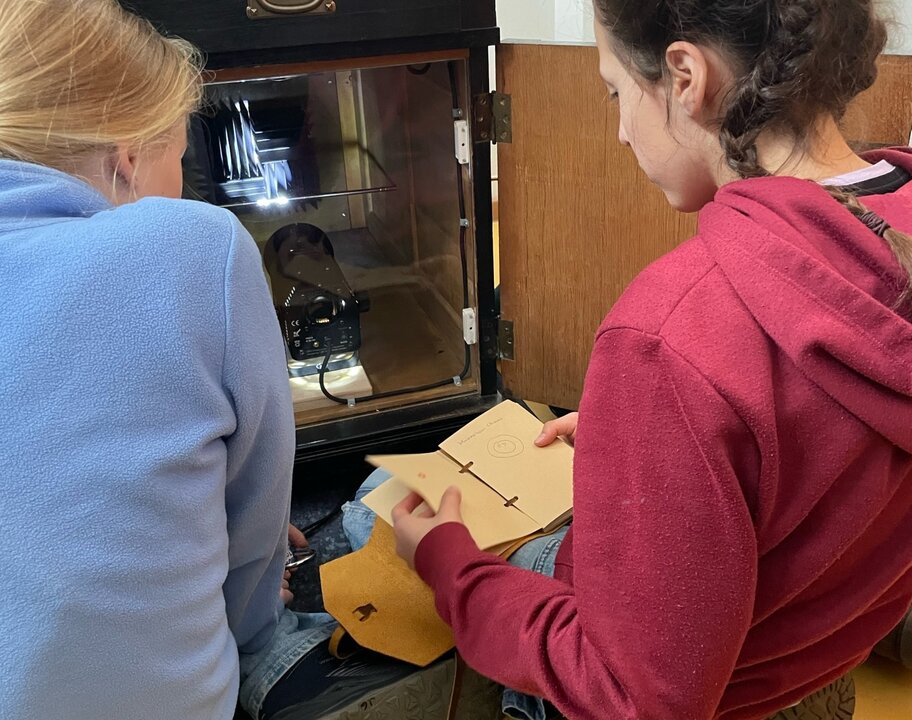
Put your teamwork and problem-solving skills to the test in the ICSE Escape Room, featuring a series of STEM-inspired puzzles and challenges. Small teams of up to four participants can book a one-hour session during each conference day. Booking details will be announced with the final programme.

Connect and Exchange

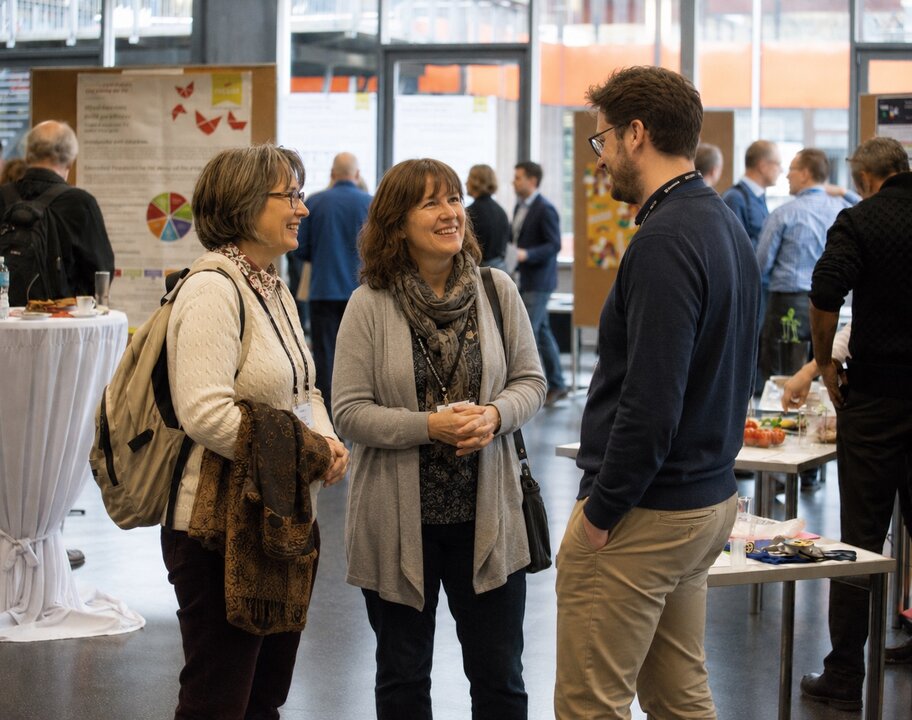
Coffee breaks, shared lunches and dedicated networking opportunities provide space for informal conversations, new connections and ideas that continue beyond the scheduled sessions.

Celebrating Together

On Thursday afternoon, music and a laudation will honour Prof. Dr. Katja Maaß and her contributions to STEM education. The day will conclude with the conference dinner (to book separately)- an opportunity to continue conversations and enjoy the evening together.

Discover Freiburg

Subject to the final schedule, optional social activities will also be offered on Friday afternoon. These activities will provide an opportunity to explore Freiburg, spend time with fellow participants and bring the conference to a relaxed and enjoyable close.

Further information on activities, registration and booking will be published with the final conference programme.

Registration

Registration for ETE Special 2027 opens here on 11 January 2027.

Take advantage of early registration until 21 April 2027. Late registration opens on 22 April 2027.

The conference fee is €180 for early and €200 for late registration.

Key Dates

  1. 15 September 2026

    Submissions open

  2. 24 November 2026

    Submission deadline

Host and Organiser

The International Centre for STEM Education (ICSE) at the University of Education Freiburg is the host and organiser of Educating the Educators: Research Perspectives in STEM Education.

ICSE connects research, educational practice and policy to advance high-quality and future-oriented STEM education. Its work focuses on translating research findings into practical approaches for teaching, teacher education and professional development. Particular areas of expertise include real-world applications in STEM education, digitalisation, interdisciplinarity, diversity and educational equity.

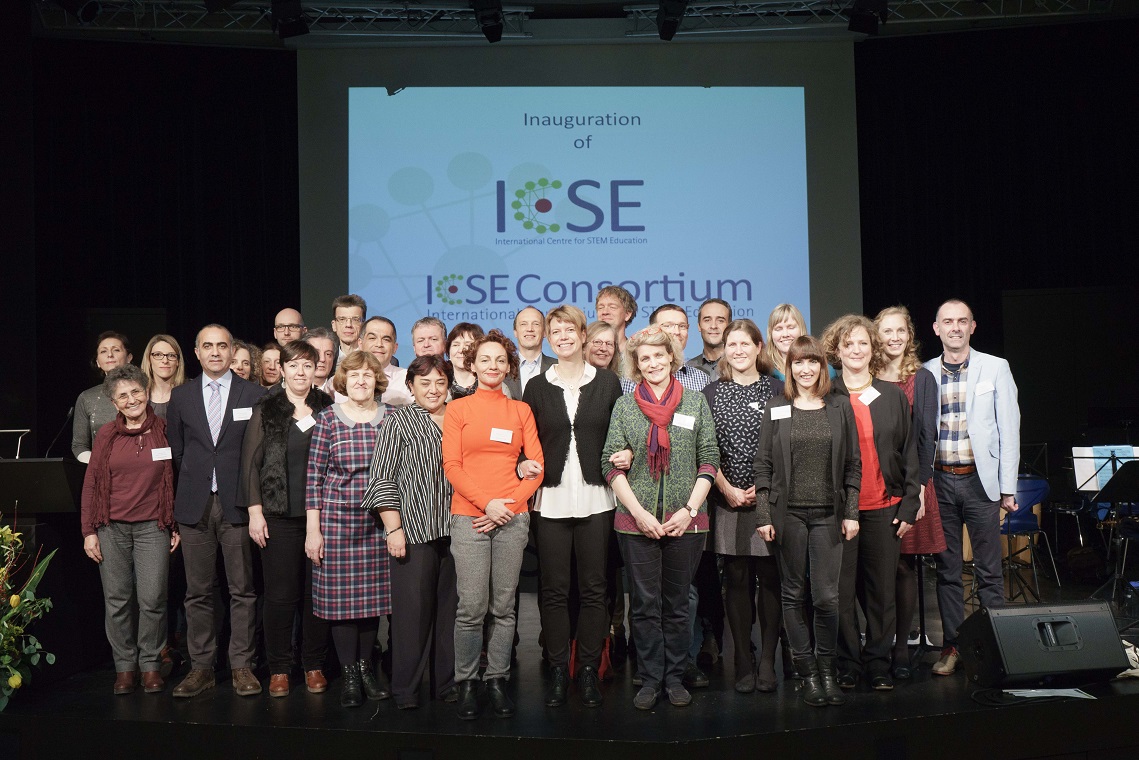
ICSE initiated the international Educating the Educators conference series in 2014. Since then, the conferences have brought together researchers, teachers, teacher educators, policy makers and other stakeholders from across Europe and beyond. The series provides a platform for exchanging research findings, innovative practices and perspectives on the professional development of STEM educators.

With the ETE Special 2027, ICSE welcomes the international STEM education community to Freiburg for three days of academic exchange, discussion and networking. The conference reflects ICSE’s commitment to strengthening cooperation across countries and professional communities and to shaping the future of STEM education together.

Learn more about ICSE

Educating the Educators

Past Educating the Educators Conferences

Following up on a core barrier to a broader take-up of innovation in STEM education, a conference series Educating the Educators (ETE) was established in 2014. ETE focuses on approaches to scaling-up STEM teacher professional development and has, though a research-based conference, from the outset been designed to enhance exchange between research, policy and practice. 

  • Limassol, 2025: Educating the Educators 2025 took place in in Limassol on the beautiful island of Cyprus. The conference focused on “21st Century Challenges: Technology, Sustainability, Interdisciplinarity and Diversity”. 
  • Leiden, 2023: Educating the Educators VI took place in the inspiring Naturalis Museum in Leiden in the Netherlands. This time the conference focused on the topic “STEM and Open Schooling for Sustainability Education”. 
  • Freiburg, 2019: Following the first two conferences, ETE III continued to provide a space for an exciting exchange of knowledge on approaches to and concrete materials for scaling up professional development in STEM education. 
  • Freiburg, 2016: Educating the Educators II boasts a highly innovative concept combining a classical research conference with interactive formats such as a Policy Seminar, a Materials Market and a Company Visit. 
  • Essen, 2014: The first Educating the Educators Conference on international approaches to scaling-up professional development in maths and science education takes place in Essen.

Background and key topics of the series

Research and experience reveal that innovative teaching approaches promoted by STEM education researchers differ significantly from the day-to-day practices of teachers in many countries. This clearly implies that research on implementing teaching approaches effectively is essential to bridge this gap. These investigations of scaling up should be broad in scope and attend not only to the practices of teachers and researchers, but also to the practices of other important stakeholders including school principals, teacher educators, educational administrators, and policymakers. 

  • Implementing innovations in one classroom can be a challenging endeavor, and it is even more demanding across a whole school. Logically, it becomes exponentially more challenging, when the effort of scaling up an innovation aims to reach many schools, a district, or even a state or nation. Therefore, scaling up has become a concern for STEM education research during the last ten years.
  • In particular, the ‘Educating the Educators’ conference series serves as a lever and platform for international exchange about concepts and experiences concerning such questions as: 
    • What are the features of successful concepts and professional development? 
    • What are the needs and experiences of the different target groups? 
    • Which pitfalls must be avoided?

Educating the Educators Conferences Books

The first five Educating the Educators conferences took place in 2014 in Essen, Germany, 2016 and 2019 in Freiburg, Germany, 2023 in Leiden, Netherlands and 2025 in Limassol, Cyprus. Like the upcoming conferences, the previous events offered participants from all over the world a platform to explore, discuss and exchange approaches to scaling up professional development in math and science education. 

If you want to find out more about the past conferences, please take a look at our conference proceedings and conference books from the ETE I, ETE II, ETE III and ETE IV. As we will publish a Festschrift for ETE 2027, no separate conference proceedings are planned.

  • ETE V Proceedings

    STEM Teacher Education in the 21st Century

  • ETE IV Proceedings

    Proceedings of the 4th Educating the Educators Conference

  • ETE III Conference Book

    International conference on approaches to scaling up professional development in maths and science education

  • ETE II Conference Book

    2nd conference on international approaches to scaling-up professional development in maths and science education

  • ETE I Conference Proceedings

    Educating the educators: international approaches to scaling-up professional development in mathmatics and science education

About Katja Maass

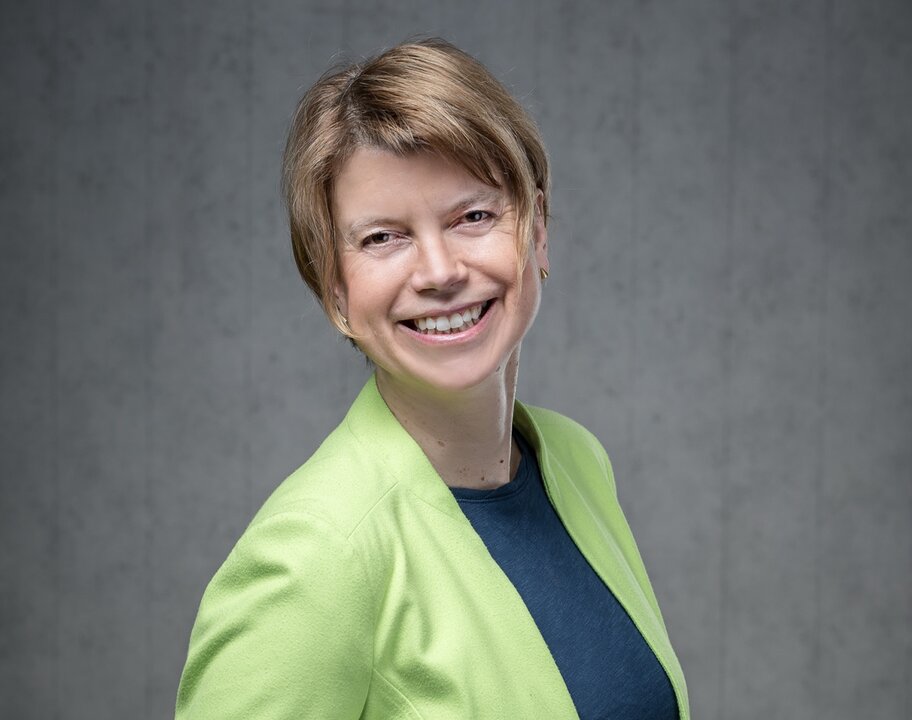
Professor Katja Maass is a leading researcher in mathematics and STEM education and Director of the International Centre for STEM Education (ICSE) at the University of Education Freiburg. Her work focuses on mathematical modelling, inquiry-based and interdisciplinary STEM learning, teacher professional development, diversity, and the role of digital technologies and artificial intelligence in education.

Drawing on her own experience as a secondary-school teacher, she has consistently worked to connect educational research with classroom practice. She has initiated and coordinated numerous European projects and built international networks bringing together researchers, teachers, teacher educators and policymakers.

Katja Maass also co-initiated the Educating the Educators (ETE) conference series in 2014. Its emphasis on research-based professional development, collaboration and sustainable educational innovation reflects the central aims of her work. The three tracks of ETE Special - (1) Real-World Applications in STEM Education, (2) STEM Education in the Digital Era, and (3) Diversity in STEMEducation - highlight areas to which she has made important and lasting contributions.

Held in celebration of her 60th birthday, ETE Special brings the international STEM education community together to reflect on these themes, share current research and practice, and explore future directions for STEM education.

Conference Leadership

Conference Chairs
  • Prof. Michiel Doorman

    Utrecht University, the Netherlands

  • Dr. Oliver Straser

    ICSE, University of Education Freiburg, Germany

  • Elena Schäfer

    ICSE, University of Education Freiburg, Germany

Scientific Committee

  • Mónica Baptista, University of Lisboa, Portugal

  • Jesper Boesen, Jönköping University, Sweden

  • Michiel Doorman, Utrecht University, the Netherlands

  • Janka Medová, Constantine the Philosopher University in Nitra, Slovak Republic

  • Despina Potari, National and Kapodistrian University of Athens, Greece

  • Matija Bašić, University of Zagreb, Croatia

  • Gültekin Cakmakcı, Hacettepe University, Türkiye

  • Ragnhild Lyngved Staberg, Norwegian University of Science and Technology, Norway

  • Željka Milin Šipuš, University of Zagreb, Croatia

  • Jenny Sendova, Institute of Mathematics and Informatics, Bulgarian Academy of Sciences, Bulgaria

Stay in Freiburg Freiburg

Freiburg im Breisgau is a welcoming, sunny university city at the edge of the Black Forest. Its historic old town - with the Gothic Minster, cobbled lanes and the charming “Bächle” water channels - invites strolling, while cafés and markets showcase the region’s renowned Baden cuisine. Freiburg is internationally recognised for sustainability, renewable energy and bike- and tram-friendly mobility.

Just beyond the city, the Black Forest offers panoramic hiking and cycling - from the Schauinsland ridge above Freiburg to Feldberg and the lakes around Titisee. The Rhine Valley’s Kaiserstuhl and Markgräflerland feature vineyards, nature reserves and picturesque villages. Basel and Colmar are within easy reach for day trips.

Getting around is easy: trams and regional trains connect the city and neighbourhoods efficiently, and cycling is convenient and safe. Freiburg is well linked by rail to major European hubs; nearby airports include EuroAirport Basel – Mulhouse - Freiburg, Zurich and Frankfurt.

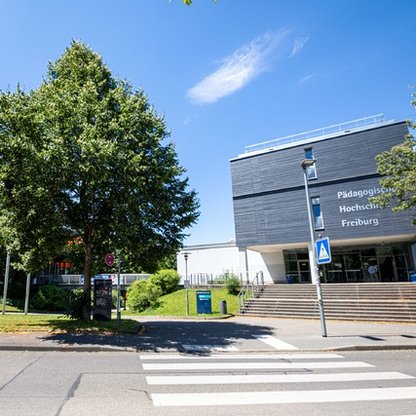
Conference venue: University of Education Freiburg

The University of Education Freiburg is a higher education institution specialising in educational science, with the right to award doctoral and post-doctoral degrees. With around 5,000 students and 400 academic staff, the University combines research, teaching and the promotion of young talent, with a strong emphasis on connecting academic knowledge with professional practice. Its broad range of Bachelor’s and Master’s programmes, teacher education programmes and continuing education opportunities is complemented by research-based and practice-oriented learning. Interdisciplinary cooperation and international collaboration are important features of the University’s approach to education and research.

Mathematics and the natural sciences are an important focus of both research and teaching at the University. A wide range of courses and research projects in mathematics, physics, chemistry and geography, together with dedicated learning laboratories, provide opportunities to explore how STEM subjects can be taught and learned through inquiry, experimentatoon and real-world applications. By closely linking theory, research and practice, the University prepares future educators to support meaningful and engaging STEM learning.

The International Centre for STEM Education (ICSE) [link to the ICSE text] is an internationally connected research centre based at the University of Education Freiburg.

The campus in the Littenweiler district sits close to the Black Forest foothills in a green, quiet setting that supports focused work and exchange. Modern teaching and meeting spaces are within short walking distance across campus. The venue is easily reached by public transport from the main station and city centre; regional trains stop at Freiburg-Littenweiler, and tram connections serve the surrounding area. Directions within the conference venue will be available here in due course.

Accommodation

We offer reserved room blocks at selected hotels for conference participants. Details and booking will be available here in autumn 2027.

Directions and Accessibility

Conference Venue

The ETE Conference will take place at:

University of Education Freiburg (Pädagogische Hochschule Freiburg)
Kunzenweg 21
79117 Freiburg im Breisgau
Germany
Maps: Google Maps · OpenStreetMap

For official directions and a campus map, please see the University of Education Freiburg – Contact & Getting to the University page.

Getting to the conference venue

From Freiburg Central Station to the Conference Venue

Freiburg (Breisgau) Hauptbahnhof (Central Station) is well connected to the German and European long-distance rail network. 

From Freiburg Central Station, there are two convenient ways to reach the University of Education Freiburg: 

By regional train 

Take a regional train towards Titisee, Kirchzarten or Villingen and get off at Freiburg-Littenweiler. The journey takes approximately 10 minutes. Freiburg-Littenweiler station is located directly next to the University of Education. 

By tram 

Take Tram Line 1 towards Littenweiler from the tram stop on the bridge above Freiburg Central Station. Get off at the final stop, Laßbergstraße. From there, walk approximately 200 metres along Lindenmattenstraße to the University of Education. The total journey from Freiburg Central Station takes approximately 20 minutes. 

For current connections and Tickets, please use: 

Local Public Transport 

Freiburg has an extensive network of trams, buses and regional trains. Tram Line 1 connects Freiburg city centre with Littenweiler and the University of Education. 

For information about local public transport and Ticket options, please see: 

Please note that the VAG website is primarily available in German. The RVF website provides key information for visitors in English.

Accessibility

We want the ETE Conference to be accessible to all participants. Detailed information about accessible routes within the conference venue, accessible conference rooms and restroom facilities will be provided here once confirmed.

If you have specific accessibility requirements or require assistance during the conference, please contact the conference team:

Email: educating-the-educators@ph-freiburg.de 

We recommend contacting us in advance so that we can make the necessary arrangements.

Travel Directions

Arriving by Air 

Freiburg can be reached conveniently from several international airports. 

EuroAirport Basel – Mulhouse - Freiburg (BSL/MLH)

EuroAirport is one of the closest international airports to Freiburg. 

A direct airport bus connects EuroAirport with Freiburg Central Bus Station, located next to Freiburg Central Station. The journey takes approximately 60 minutes, with regular departures throughout the day. 

For current connections and further transport options, please see EuroAirport – Transport (English). 

Alternatively, you can take Bus Line 50 from EuroAirport to Basel SBB railway station and continue by train towards Freiburg.

Zurich Airport (ZRH) 

Zurich Airport is directly connected to the Swiss railway network. Rail connections to Freiburg usually require one or more changes. 

For current connections, please use the SBB – Swiss Federal Railways Timetable (English).

Frankfurt Airport (FRA)

Frankfurt Airport has its own long-distance railway station and offers convenient rail connections towards Freiburg.

For current connections and Tickets, please use Deutsche Bahn – Journey Planner and Tickets (English).

Arriving by Car

The University of Education Freiburg can be reached via the A5 motorway. 

When arriving from Karlsruhe or Basel, take the Freiburg-Mitte exit and follow the signs towards Titisee-Neustadt / Donaueschingen (B31). Detailed driving directions and information about the university car park are available on the University of Education Freiburg – Contact & Getting to the University page. 

For general information about travelling to Freiburg, including parking, Park & Ride and electric vehicle charging, please see Visit Freiburg – Arrival (English). 

We recommend using public transport where possible, as parking close to the conference venue may be limited.

Cycling and Bike Sharing 

Freiburg is a bicycle-friendly city with an extensive cycling network. 

The city's Frelo bike-sharing system provides rental bicycles at stations throughout Freiburg and the surrounding area. 

Information about cycling, bike sharing and other options for getting around Freiburg is available via Visit Freiburg – Arrival (English). 

More detailed information about Frelo is available from VAG Freiburg – Frelo (German).